
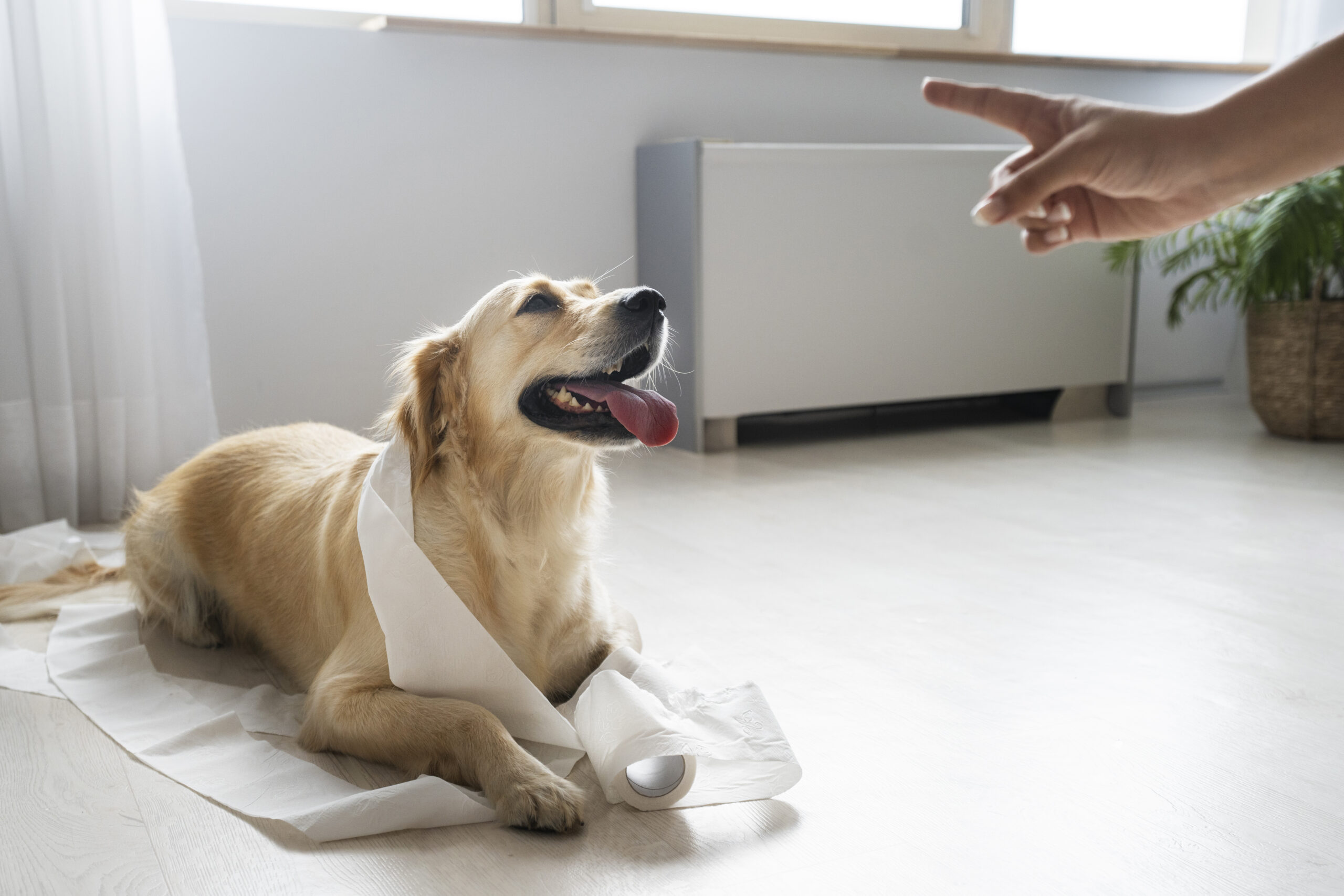

Coming home to find it wrecked is stressful.
Before we begin, press play for a quick summary of what we’ll be covering in this post.
The first thing most people tell me when they reach out for dog separation anxiety training is some version of the same story: they left for work, came home to something destroyed, and genuinely can’t tell if their dog is anxious, bored, or just bad.
Almost always, it’s the first one.
Separation anxiety is one of the most misunderstood things I encounter as a trainer, not because it’s complicated, but because the behavior looks like defiance when it’s actually distress. A dog who chews through a door while you’re gone isn’t challenging your authority. They’re trying to escape the panic. That reframe changes everything about how you respond to it.
It’s not behavior. It’s emotion.
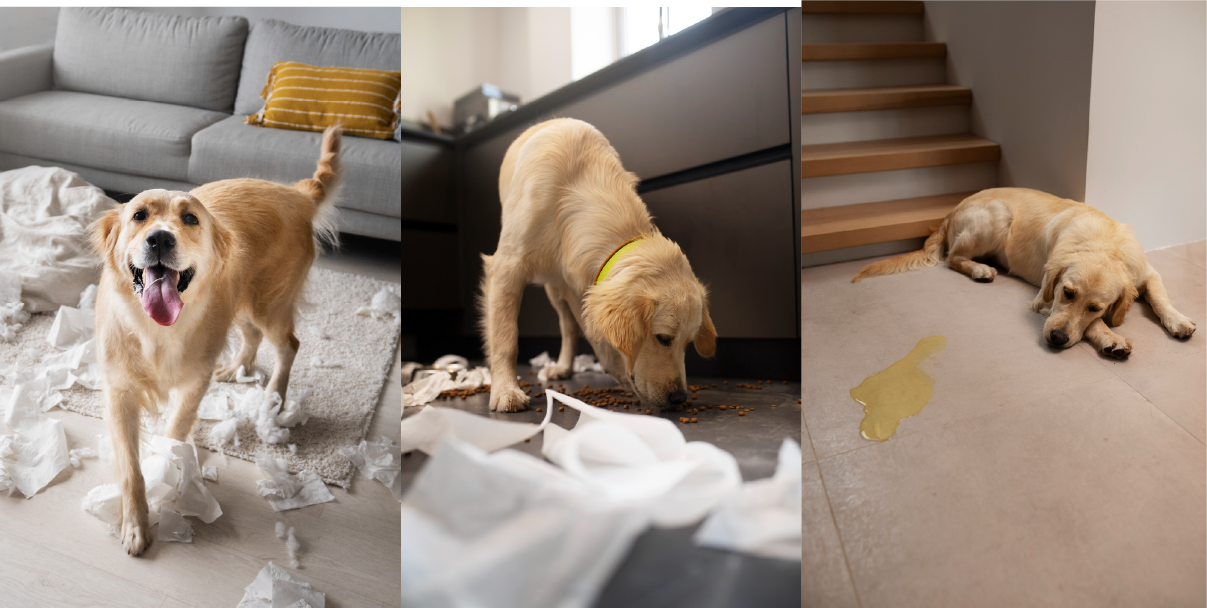
When training a dog with the goal of correcting a bad habit, we’re forgetting something very important: in training, the owner or guardian becomes a leader who gives the dog the confidence to understand the signals in its environment. This is why true dog separation anxiety training goes beyond obedience, because anxiety isn’t a bad habit; it’s a dog’s response to a deep fear of being alone. It’s an emotional reaction beyond its control.
What I see constantly is owners who’ve tried every tip on the internet and still come home to the same destruction. The problem usually isn’t that they’re doing something wrong. The problem is they’re solving the wrong thing. The behavior is the symptom. The emotion underneath it is what needs attention.
What to watch for
Not every anxious dog is obvious about it. Before you leave does your dog follow you room to room while you get ready? Start panting the moment you pick up your keys? Refuse breakfast? That last one surprises people, but a dog under stress often won’t eat.
While you’re gone: barking or howling, destruction near exits, accidents despite being house-trained. When you come back: excitement that takes a long time to settle, clinginess that lasts for hours.
Any one of these alone could be something else. Several of them together, consistently that’s separation anxiety.
What actually helps
The morning sets more of the tone than most people expect.
Walk before you leave — not a quick five minutes. Fifteen to twenty minutes of real movement gives the nervous system a chance to discharge. A dog who has physically moved through the world before you go is in a genuinely different state than one who hasn’t.
Make your exit boring. I know this feels cold. But long, emotional goodbyes signal that your leaving is a significant event — and significant events are exactly what an anxious dog doesn’t need more of. A calm pat, a quiet word, out the door. You’re not being detached. You’re communicating safety.
Give them something to do the moment you leave. A frozen Kong, a sniff mat, a long-lasting chew. It doesn’t resolve the anxiety, but it interrupts the spiral right at the moment it usually starts.
Practice short departures. Leave for five minutes. Come back completely calm — no big reunion, just ordinary. Then ten minutes. Then twenty. What you’re teaching, slowly, is that departure is temporary and return is unremarkable.
The part most training skips
In dog separation anxiety training, a dog carrying anxiety in their body doesn’t learn the same way a settled dog does. What I’ve found (and it’s now central to how I work) is that addressing the dog’s emotional and energetic state before any behavioral training changes what’s possible. This is the foundation of my Mirror Method: I use Reiki as a starting point, not an add-on. A nervous system that isn’t flooded learns differently. The results in dog separation anxiety training hold longer.
Not everyone agrees with this approach. But I’ve seen it work consistently enough, across enough different dogs, that I’m not going back to skipping it.
The goal isn’t a dog who hides the anxiety better. It’s a dog who genuinely doesn’t need to be anxious anymore. That takes longer to get to but it’s real.
Ready to start?
Contact Paw Reboot to schedule a consultation and find out which training program is right for your dog.