

This is one of the questions I get asked most often. And the answer I give always surprises people — not because it contradicts what they think, but because it goes somewhere they didn’t expect.
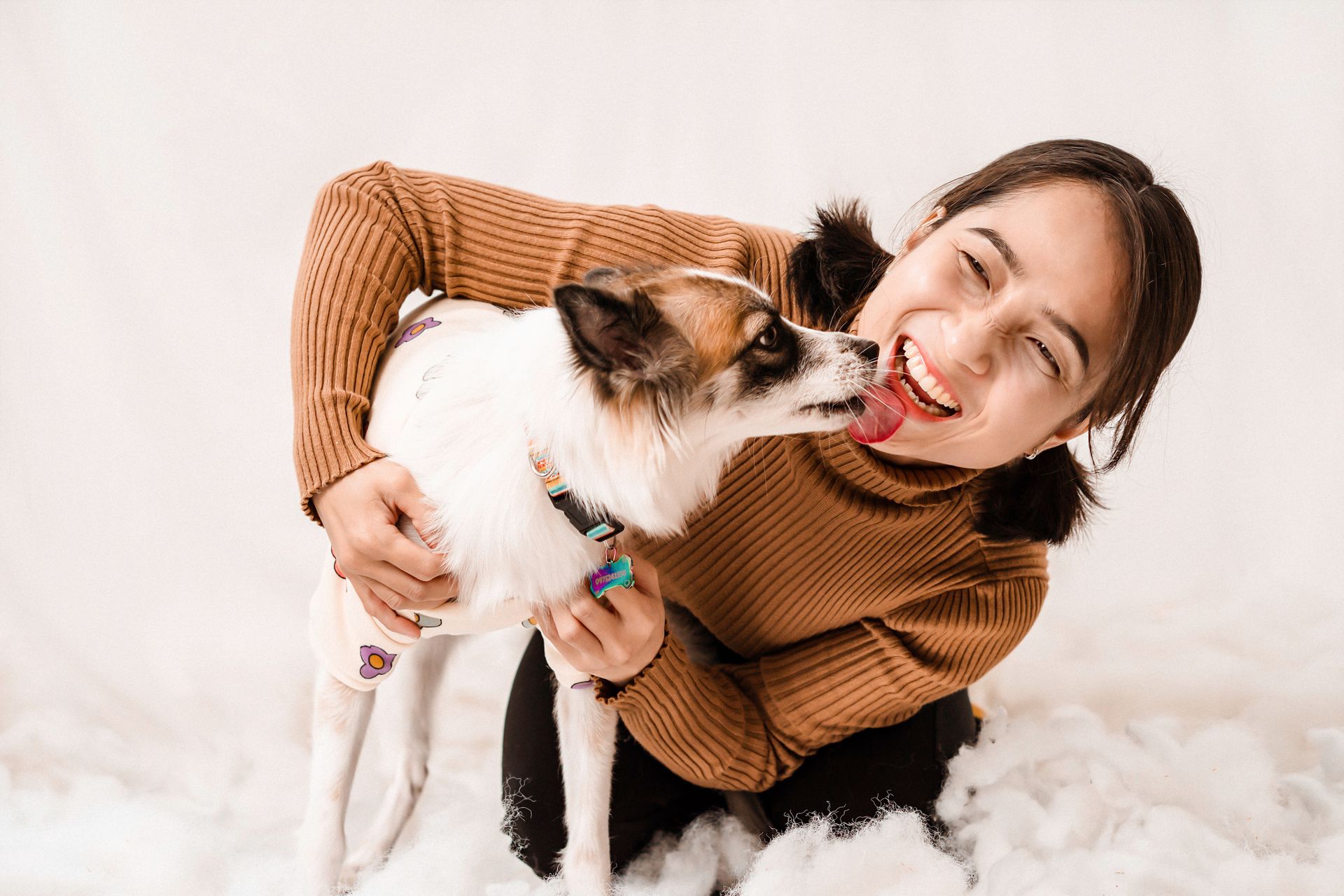
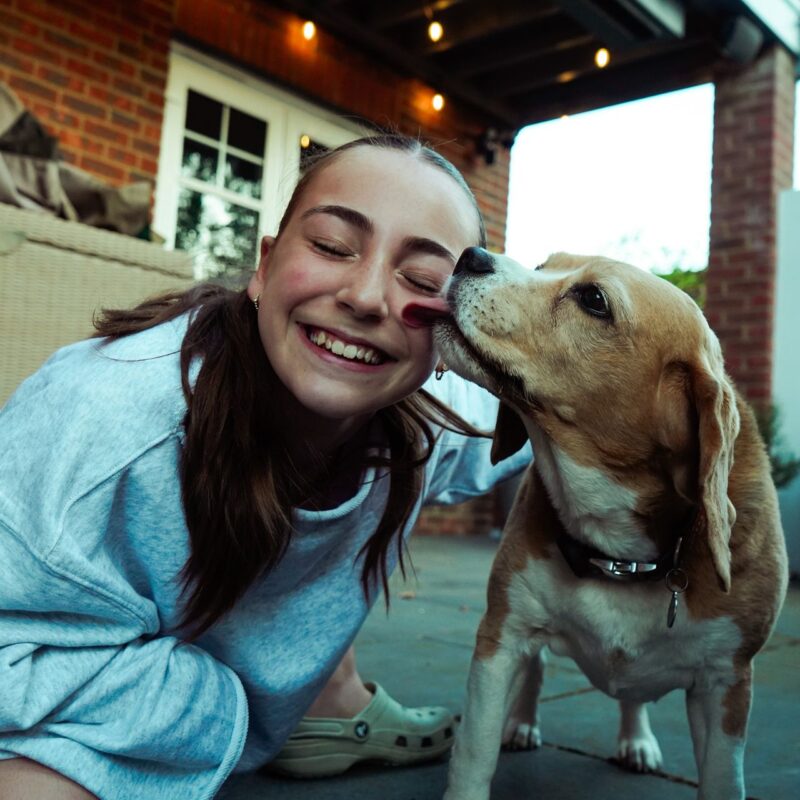
Yes, licking is affection. But calling it “just affection” is a bit like saying a conversation is “just words.” Technically true. Mostly missing the point.
There’s another layer that I think about a lot in my work.
Licking is also a self-regulating behavior. It triggers calming signals in the dog’s own nervous system — it’s something they learned from the very beginning of their lives, when their mother licked them to soothe and stimulate them. When your dog licks you, part of what’s happening is that they’re managing their own state. Sometimes they’re reading you. Sometimes they’re responding to what they found — and trying to settle themselves in the process.
Which means that if your dog licks you obsessively, or in specific moments of tension in the house, it’s worth paying attention to. Not as a problem to stop, but as information. What’s in the air when it happens? What were you feeling ten minutes before?
This is why I always say: the bond between a dog and their person isn’t just emotional — it’s physiological. Your nervous system and your dog’s nervous system are in constant dialogue. Your state shapes theirs. Your anxiety raises their alertness. Your calm genuinely settles them — not because they’re trained to respond to it, but because they’re built to attune to it.
I see this play out every day with Galavant. He’s a dog who came from a history of fear and unpredictability, and one of the things I had to learn early on was that my state mattered as much as any command I gave him. Whether we are working in the quiet neighborhoods of Roswell or navigating the busy streets of Atlanta, I’ve learned that if I walked into a situation tense, he felt it before I finished the thought. The training was only as good as the person doing the training — and the person had to be settled first.
So when people ask me why their dog licks them, I answer the question. But then I ask one back: what does your dog usually find when they do?
If they find a calm, consistent person — someone whose nervous system isn’t running at full alert all day — your dog learns that the world is predictable and safe. That foundation is worth more than any command you’ll ever teach them. At Paw Reboot, I help dog owners across Marietta, Buckhead, Alpharetta, and Kennesaw build this foundation every day, helping them understand the silent language their dogs are speaking.
The lick is a small thing. What it’s measuring isn’t.