

Before we begin, press play for a quick summary of what we’ll be covering in this post.
I want to tell you something that might change how you think about the twenty minutes you spend outside with your dog every morning.
The walk is not for exercise.
I mean — yes, the physical movement matters. But if that’s all you’re getting out of it, you’re missing what the walk is actually doing. Or more precisely, what it’s teaching.
Every time you go out, your dog is taking notes.
Not consciously, not in the way we think about learning — but in the way that matters most. They’re noticing who’s making the decisions. Who chose this direction. Who responded to that other dog across the street, and how. Who got distracted, who held the pace, who let the leash go slack because it was easier.
I work with a lot of owners who are genuinely puzzled by their dog’s behavior at home. The jumping, the door-rushing, the inability to settle. And then I watch them walk their dog and I see it immediately: the dog is three feet ahead, ears forward, deciding everything. That dog isn’t misbehaving at home. It’s doing exactly what it’s been trained to do on every single walk — lead.
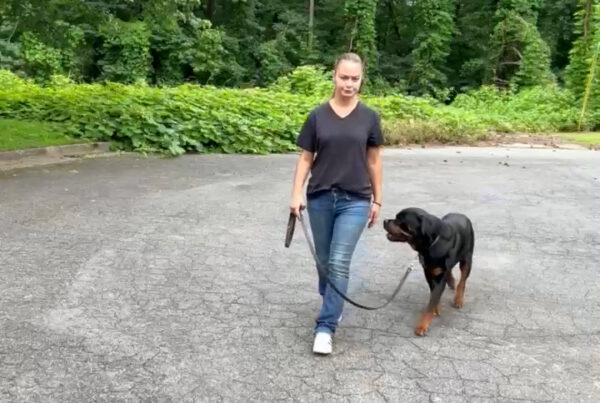
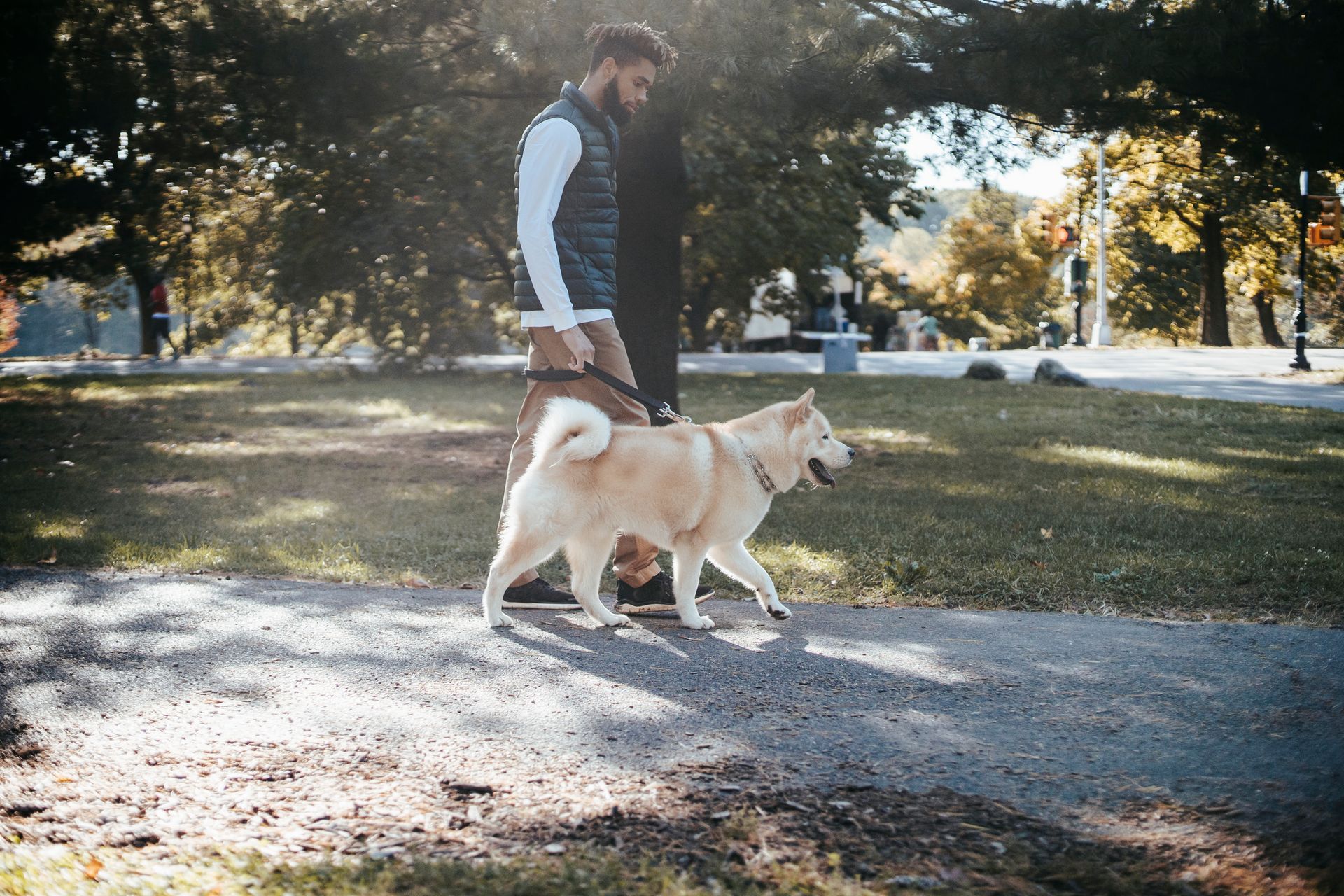
When Thor and I walk, I decide the pace. I decide when we cross the street. If another dog appears and he wants to pull toward it, I don’t correct him harshly — I just don’t go. Not yet. I said we’re walking this way, so we walk this way. It sounds small. It isn’t. Those micro-moments of consistency are where the relationship actually gets built.
With Galavant it was even more deliberate, especially early on. He came to me having learned that the world was unpredictable and that he had to manage it himself. Teaching him to walk calmly at my side wasn’t just a leash skill — it was teaching him that someone else had things under control. That he could stand down. That took time and repetition, but it started outside, on the walk, every single day.
Here’s what a structured walk gives your dog that a free run in the backyard doesn’t: mental work. Decision-making requires energy — and when your dog isn’t making the decisions, they’re using that mental energy to follow, to stay attuned, to trust. A dog that comes home from a real walk is calm in a different way than a dog that just ran around. It’s the difference between physically spent and genuinely settled.
Twenty minutes of structured walking does more for a reactive or anxious dog than an hour of fetch. I’ve seen it too many times to doubt it.
I’m not saying the walk has to be rigid or joyless. Your dog can sniff. They can investigate. There’s room for that within a walk that still has direction and leadership. But there’s a difference between a dog that checks in with you and returns to your side, and a dog that’s essentially dragging a human behind them while they do whatever they want.
If leash pulling and lack of structure sound familiar, basic obedience training is where that gets rebuilt from the ground up. The walk is often the first place I see it — and usually, it’s the first place it gets fixed too.
The walk is where your relationship gets practiced every day. If the dynamic outside is chaotic, it will be chaotic everywhere else too. Fix the walk, and a surprising number of other things start to shift on their own. Implementing a structured dog walk takes patience, but the peace of mind is worth it.
Ready to start? Contact Paw Reboot, your trusted expert for dog training in Atlanta, to schedule a consultation. I proudly serve Roswell, Marietta, Buckhead, Alpharetta, and Kennesaw. Let’s find out which training program is right for your dog and transform your daily walks together.